


Miami schools could lose $500 million amid amendment 3 confusion
MIAMI, FL — October 26, 2026 — Miami-Dade County Public Schools could lose approximately $500 million in funding if voters reject a property tax referendum in the November 3 election, raising concerns about teacher…
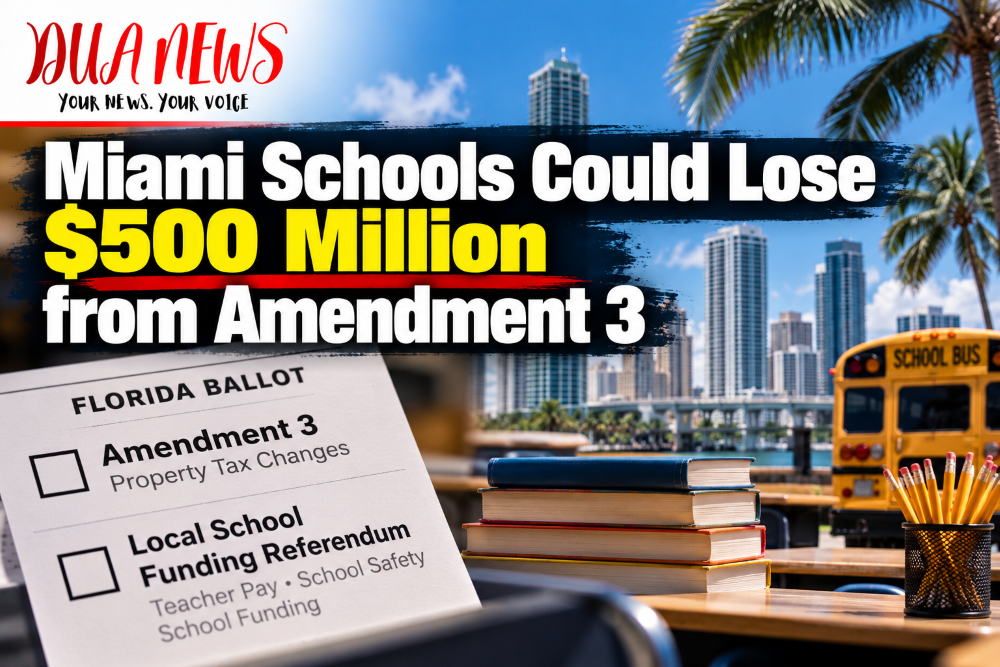
MIAMI, FL — October 26, 2026 — Miami-Dade County Public Schools could lose approximately $500 million in funding if voters reject a property tax referendum in the November 3 election, raising concerns about teacher salaries, school security, and the future of public education in South Florida.
The warning comes as Florida voters prepare to decide two separate property tax questions on the same ballot, creating concerns among education leaders that some residents may confuse a local school funding renewal with a statewide proposal to reduce property taxes.
According to reporting published Monday by Axios Miami, educators fear that the debate surrounding Florida’s Amendment 3 could complicate efforts to renew an existing tax that supports Miami-Dade schools.

What Is at Stake for Miami Schools?
The Miami-Dade school funding referendum is not a proposal to introduce an entirely new tax. Instead, voters are being asked whether to continue an existing property tax that helps finance teacher compensation and school safety.
The tax was originally approved in 2018 and renewed at a higher rate in 2022.
Under the current arrangement, the levy is one mill, equivalent to $1 for every $1,000 of taxable property value. For example, a property with a taxable value of $300,000 would generate approximately $300 annually through this levy.
If approved, the renewal would continue the tax from July 1, 2027, through June 30, 2031.
The money supports public schools, including eligible charter schools, with funding directed toward teacher and instructional personnel compensation, student safety, and school security.
Teachers Could Face Major Salary Reductions
The financial consequences could be substantial if voters reject the measure.
According to figures reported by WLRN, district officials estimate that Miami-Dade County Public Schools could lose approximately $500 million.
The district also estimates that average teacher salaries could fall from $73,030 to $57,814 without the funding, a potential reduction of more than $15,000 annually.
These figures represent projections of what could happen if the referendum fails, not salary cuts that have already been approved.
Education officials argue that such reductions would make it more difficult to recruit and retain qualified teachers in Miami-Dade, where housing and other living expenses remain significant challenges.
Superintendent Rafael Villalobos has warned that losing the additional funding could undermine the district’s ability to compete for educators.
Why Amendment 3 Is Creating Confusion
The November ballot also includes Amendment 3, a separate statewide proposal concerning property taxes.
The amendment would increase homestead exemptions and reduce certain property tax obligations for qualifying homeowners.
Supporters argue that the measure would provide financial relief to residents facing high housing costs and rising household expenses.
However, local governments have warned that reducing property tax collections could affect funding available for public services.
The concern among some educators is that voters who support reducing property taxes statewide might also reject local school funding renewals without recognizing that the two questions serve different purposes.
The Miami-Dade school referendum concerns an existing levy specifically supporting school operations, while Amendment 3 proposes broader changes to Florida’s property tax system.
A vote on Amendment 3 is not the same as a vote on the Miami-Dade school referendum. Each measure will be decided separately.
Not Everyone Expects Voter Confusion
Despite the concerns, some education representatives believe Miami-Dade residents understand the existing school tax.
United Teachers of Dade President Antonio White acknowledged to Axios that confusion is possible but indicated that many voters are familiar with the levy because it has been in place for years.
The school funding renewal has also attracted support from officials across political lines, including some who generally oppose higher taxes but believe the existing levy has helped support teachers and school safety.
For taxpayers, the decision involves weighing the cost of continuing the property tax against the educational services and employee compensation supported by the revenue.
A Decision With Long-Term Consequences
The stakes extend beyond Miami-Dade.
Broward and Palm Beach counties are also asking voters to renew school funding measures, with education officials across South Florida expressing concern about the consequences of losing those revenues.
In Miami-Dade, the referendum arrives as the district faces financial pressure and difficult decisions about spending.
If voters approve the renewal, the existing school tax would continue for another four years.
If they reject it, the district would face the prospect of losing a major funding source, potentially forcing difficult decisions involving salaries, staffing, and school security.
With Election Day approaching on November 3, the outcome could have lasting implications for teachers, students, families, and property owners across Miami-Dade County.
DUANEWS — Your News. Your Voice.
Conversation 0