


Miami financial crisis: 56% of households struggle to afford basic needs
MIAMI, Fla. — November 11, 2026 — More than half of households in Miami-Dade County are struggling to afford basic necessities, according to a United Way Miami report highlighting the growing financial pressure on…
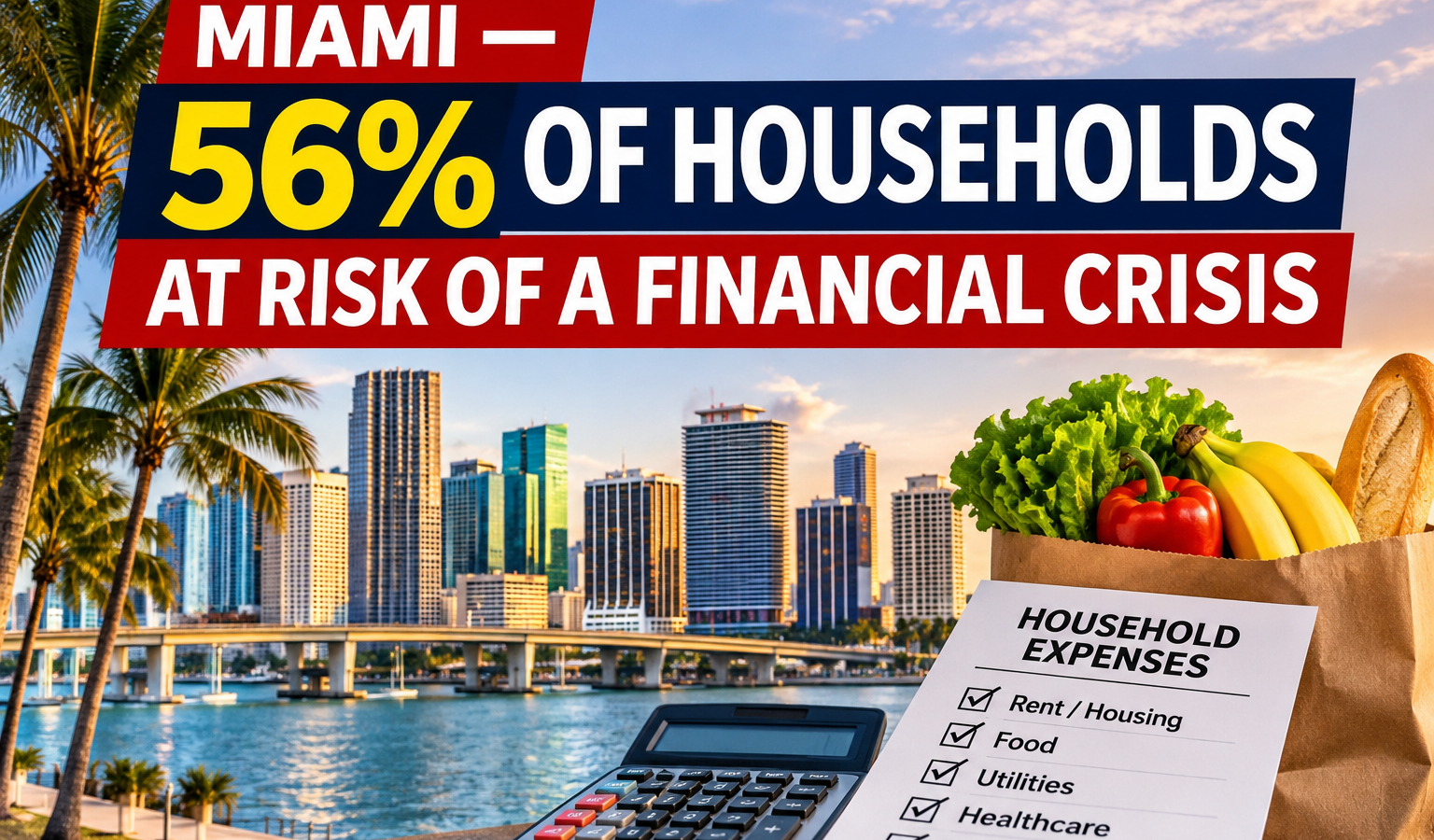
MIAMI, Fla. — November 11, 2026 — More than half of households in Miami-Dade County are struggling to afford basic necessities, according to a United Way Miami report highlighting the growing financial pressure on families across South Florida.
The findings reveal that 56% of Miami-Dade households live in poverty or earn less than what is needed to cover essential expenses, including housing, food, transportation, childcare and healthcare.
For many residents, even a steady paycheck is no longer enough to maintain financial stability.

A Family of Four Needs Nearly $100,000 a Year
According to United Way Miami’s 2026 ALICE report, a family of four needs approximately $97,548 annually to cover basic living expenses in Miami-Dade County.
However, the county’s median household income is approximately $76,184, leaving a gap of more than $21,000.
The report identifies approximately 563,947 households that are either living in poverty or unable to afford essential needs.
The term ALICE stands for Asset Limited, Income Constrained, Employed. It describes households that earn above the federal poverty level but still cannot afford the basic cost of living.
These households may include workers in retail, hospitality, healthcare, childcare and other essential industries.
Food Banks See Demand Surge
The financial pressure is increasingly visible at local food assistance organizations.
According to a November 11 report by WSVN 7News, Feeding South Florida has experienced a dramatic increase in the number of families seeking assistance.
One of the organization’s food pantries previously served approximately 40 families daily. That number has now climbed to more than 200 families per day.
Feeding South Florida has extended its pantry operations to seven days a week to respond to the growing demand.
The organization expects to distribute approximately 127 million pounds of food in 2026, compared with 110 million pounds in 2025.
Rising grocery prices, transportation expenses and housing costs are forcing many households to make difficult decisions about which bills to pay first.
Housing Costs Add to the Financial Pressure
Housing remains one of the biggest financial challenges facing Miami-Dade residents.
According to figures cited in the WSVN report, approximately 63% of renters in Miami-Dade are considered cost-burdened, meaning they spend more than 30% of their income on housing.
The county also faces a shortage of more than 90,000 affordable housing units.
For families already struggling with rent or mortgage payments, unexpected expenses such as medical bills, vehicle repairs or reduced working hours can quickly create financial instability.
The affordability problem extends beyond Miami-Dade. Broward County residents are also experiencing significant housing-cost pressures.
Working Families Are Among Those Affected
The United Way findings highlight an important distinction: financial hardship does not necessarily mean unemployment.
Many households classified as ALICE include people who work regularly but do not earn enough to keep up with rising expenses.
Families may have to reduce spending on groceries, postpone medical appointments, take additional jobs or rely on community assistance to make ends meet.
The report illustrates how the cost of basic necessities has outpaced what many households can reasonably afford.
Organizations Expand Assistance
Several South Florida organizations are responding to the growing demand.
United Way Miami is working on a five-year strategy focused on economic mobility, education, healthcare and community stability.
The organization aims to help 5,000 people obtain stable employment through its broader efforts.
Meanwhile, Feeding South Florida continues expanding food assistance, and Chapman Partnership is supporting residents experiencing homelessness and housing instability.
Chapman Partnership has also worked with OneSight Foundation and Sunglass Hut to provide free vision examinations and eyeglasses to people who might otherwise be unable to afford them.
A Growing Challenge for South Florida
The latest findings raise questions about the long-term affordability of living in one of Florida’s largest metropolitan areas.
Miami-Dade continues to attract investment, development and new residents, but many existing households are struggling to keep pace with the cost of everyday life.
The United Way report shows that financial hardship affects a majority of households in the county, including many people who are employed.
For thousands of South Florida families, the challenge is no longer simply saving money for the future. It is earning enough to cover basic expenses today.
Conversation 0