


Only in Florida: Fake parking attendant accused of collecting money
MIAMI, FL — October 26, 2026 — Finding a parking spot in Miami can be frustrating enough. But imagine paying someone to park your car, only to discover that the person collecting your money…
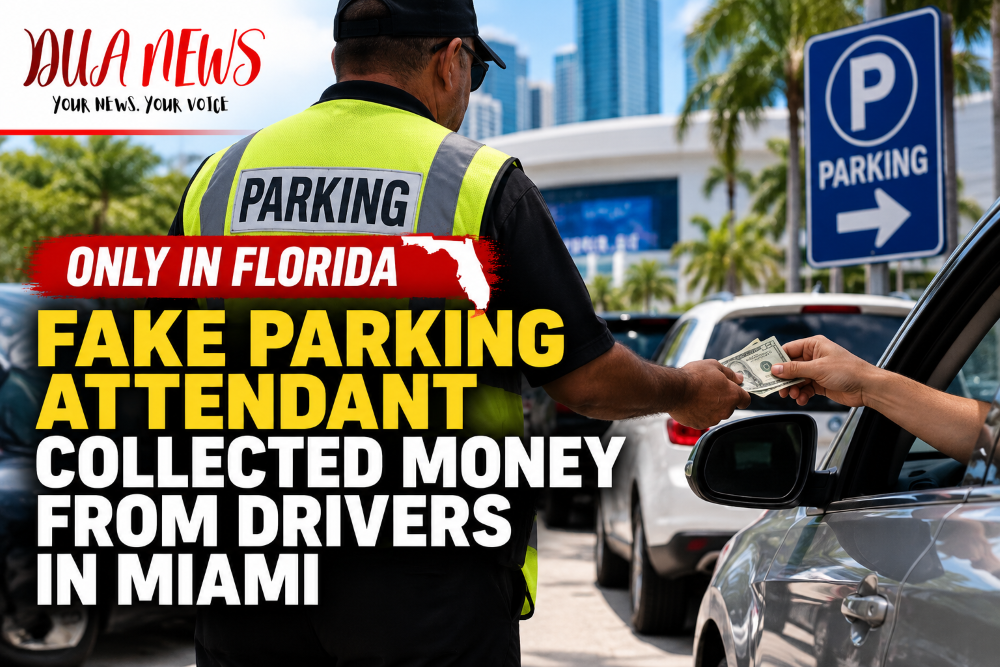
MIAMI, FL — October 26, 2026 — Finding a parking spot in Miami can be frustrating enough. But imagine paying someone to park your car, only to discover that the person collecting your money may not have been authorized to do so.
That is the unusual situation at the center of a case reported Monday in South Florida, where a 62-year-old man is accused of posing as a parking attendant and collecting money from unsuspecting drivers.
According to a report by Local 10 News, the man allegedly presented himself as an employee of the Miami Parking Authority, leading motorists to believe they were paying legitimate parking fees.

Instead, investigators allege that he was collecting money without authorization.
The case has attracted attention because it involves a familiar part of everyday life in Miami, where drivers frequently encounter paid parking lots, garages, and attendants.
A Familiar Uniform, an Unexpected Scam
Parking attendants are common in busy urban areas, particularly near restaurants, entertainment districts, and popular destinations.
Drivers often pay parking fees quickly without questioning whether the person collecting the money is officially employed by the parking operator.
Authorities allege that the suspect took advantage of that routine interaction by presenting himself as someone authorized to collect parking payments.
The allegations raise an important question for motorists: How can someone tell whether a parking attendant is legitimate?
How Drivers Can Protect Themselves
The incident serves as a reminder that parking scams can occur even in ordinary, familiar locations.
Drivers should look for official parking signs, posted payment instructions, and clearly identified employees before handing over money.
Where possible, motorists can use official parking meters, authorized payment machines, or payment applications identified by the parking operator.
Anyone asked to pay cash by an unfamiliar individual should verify that the person is authorized to collect the fee.
A legitimate parking payment should generally come with a receipt or another form of confirmation.
Drivers who suspect fraudulent activity can contact the parking operator or local law enforcement rather than confronting the individual.
An Unusual Case With a Serious Message
Although the circumstances may sound like something from a comedy, allegations of collecting money by impersonating an authorized employee are a serious matter.
The suspect faces criminal accusations, but those allegations must be established through the legal process. An arrest or criminal charge does not constitute a finding of guilt.
The case also highlights how easily everyday transactions can become opportunities for deception when people assume that someone appearing to perform an official role is legitimate.
For Miami drivers, the lesson is straightforward: Before paying for parking, make sure the person or payment system collecting your money is authorized.
DUANEWS — Your News. Your Voice.
Conversation 0