


Why did the U.S. ground all flights? Everything you need to know about the nationwide FAA shutdown
ERVIN SHKULAKU— November 13, 2026 The United States experienced a rare nationwide aviation shutdown Friday afternoon after the Federal Aviation Administration (FAA) ordered all departing aircraft to remain on the ground because of a…
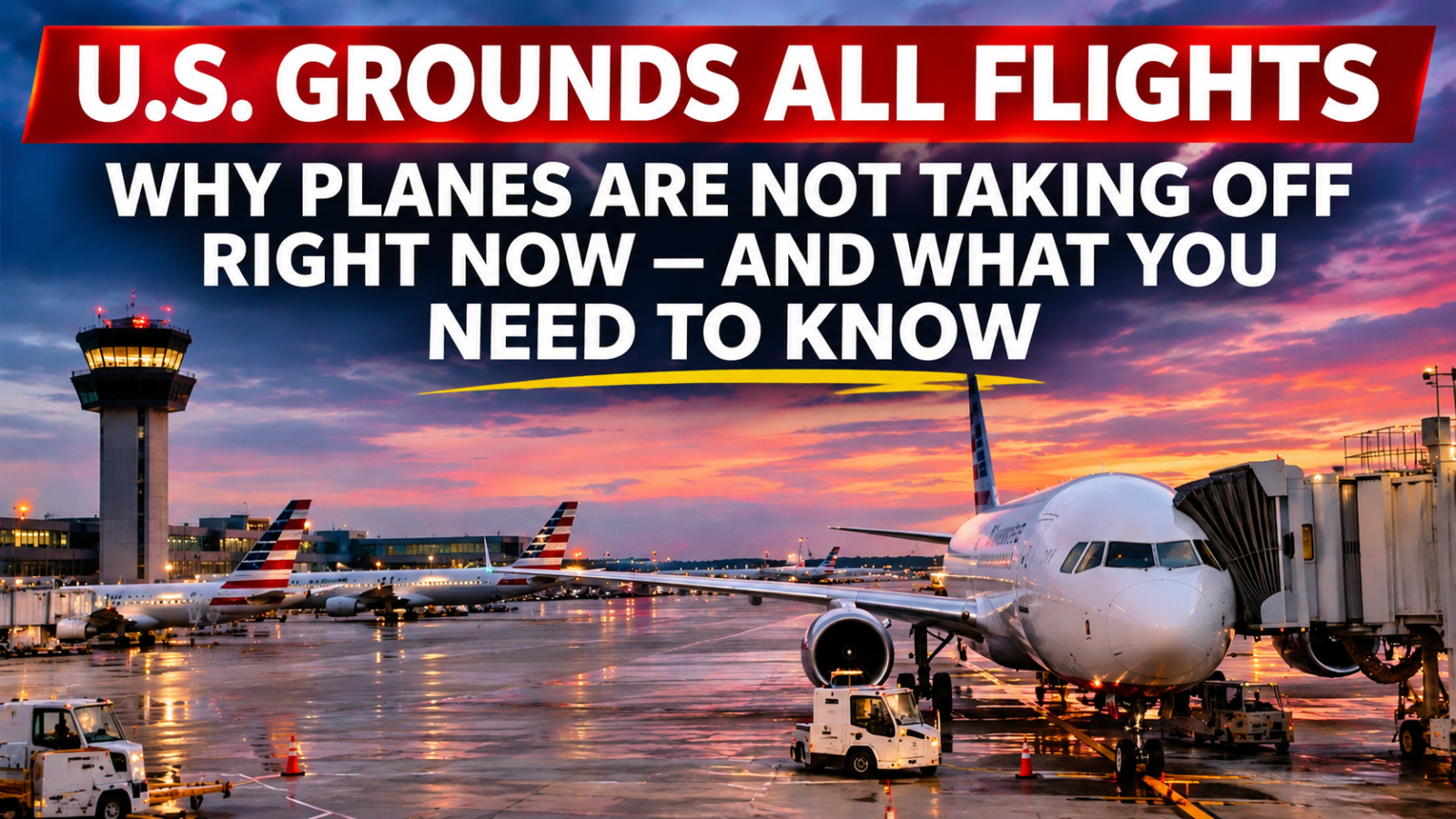
ERVIN SHKULAKU— November 13, 2026
The United States experienced a rare nationwide aviation shutdown Friday afternoon after the Federal Aviation Administration (FAA) ordered all departing aircraft to remain on the ground because of a major communications failure affecting the country’s air traffic control system.
The unprecedented disruption brought departures to a halt at airports across the nation, leaving thousands of travelers facing delays and cancellations.

The emergency order affected major airports, including those serving Florida’s largest cities, and raised immediate questions about aviation safety, the cause of the outage and when normal flight operations could resume.
Federal officials say the shutdown was a precautionary safety measure while technicians investigate the communications failure.
Why Did the FAA Stop Flights Across the United States?
According to the FAA and U.S. Transportation Secretary Sean Duffy, the nationwide ground stop was triggered by communications problems affecting Air Route Traffic Control Centers.
These facilities are responsible for managing aircraft traveling through different regions of U.S. airspace.
Air traffic controllers depend on reliable communications and surveillance systems to coordinate aircraft movements, maintain safe distances between planes and provide pilots with critical instructions.
When these systems experience widespread failures, the FAA can restrict departures to prevent additional aircraft from entering an already complicated air traffic environment.
The agency issued its nationwide order at approximately 3:54 p.m. Eastern Time on Friday, November 13.
The FAA described the situation as involving extraordinary circumstances and safety concerns.
Transportation Secretary Sean Duffy confirmed that FAA technicians were investigating a communications problem affecting the nation’s air traffic control centers.
Officials had not established the precise technical cause of the failure at the time of the initial reports.
Were All Airplanes Ordered to Land Immediately?
No. This is an important distinction.
The nationwide ground stop primarily prevented aircraft from taking off.
Airplanes already flying were generally permitted to continue toward their destinations and land under air traffic control procedures.
The order did not mean that every aircraft already in the sky was forced to make an emergency landing.
International flights arriving in the United States were subject to special handling, with decisions made on a case-by-case basis.
The FAA’s priority was to limit additional traffic while controllers and technical personnel worked to manage the situation safely.
Was This a Cyberattack or Terrorist Attack?
Federal authorities said there was no indication at the time that the disruption was caused by a malicious attack.
Homeland Security Secretary Markwayne Mullin described the incident as a telecommunications outage and said investigators had not identified evidence suggesting a deliberate attack.
However, the investigation was still underway, and officials had not announced a definitive explanation for the system failure.
There was no confirmed evidence linking the nationwide shutdown to terrorism, foreign interference or a cyberattack.
Authorities urged the public to rely on verified information as the investigation continued.
How Many Flights Were Affected?
The disruption quickly affected thousands of flights throughout the United States.
According to flight-tracking service FlightAware, nearly 7,000 flights had been delayed or canceled during the initial period of the emergency, as reported by Reuters.
Later reports indicated that the number of delays continued to increase as the shutdown affected airline schedules nationwide.
The consequences extended beyond aircraft waiting to depart.
Airlines also faced disruptions involving aircraft positioning, connecting passengers, flight crews and airport operations.
Even after the FAA lifts a nationwide ground stop, airlines may need additional time to restore normal schedules.
A prolonged shutdown could result in delays continuing into the weekend.
What Happened at Florida Airports?
The nationwide FAA order applied to airports across Florida, including:
- Orlando International Airport (MCO)
- Miami International Airport (MIA)
- Tampa International Airport (TPA)
- Jacksonville International Airport (JAX)
- Fort Lauderdale-Hollywood International Airport (FLL)
Because the order covered all U.S. airports, departures from these facilities were subject to the same nationwide restrictions.
Orlando International Airport was among the airports where travelers were photographed waiting during the disruption.
Florida is particularly vulnerable to widespread aviation interruptions because of its busy tourism industry, international connections and major airline networks.
Passengers traveling to and from Florida could experience delays, missed connections and cancellations.
However, the number of affected flights at each individual Florida airport had not been confirmed in the initial reports.
Why Is This Shutdown So Unusual?
Nationwide flight ground stops are extremely rare.
The United States previously experienced a major nationwide aviation shutdown following the September 11, 2001, terrorist attacks.
Another nationwide ground stop occurred in January 2023 after a malfunction involving the FAA’s Notice to Air Missions (NOTAM) system.
That system provides pilots and airlines with essential information about potential hazards and changes affecting flight operations.
Friday’s emergency involved a different reported problem: widespread communications failures affecting air traffic control facilities.
The latest incident has renewed concerns about the reliability of the country’s aviation infrastructure.
Is America’s Air Traffic Control System Outdated?
The U.S. air traffic control network includes thousands of pieces of equipment, communications systems, radar installations and navigation facilities.
Some parts of the infrastructure have operated for decades and require modernization.
The FAA has experienced previous regional communications and equipment failures, although most did not require a nationwide shutdown.
Federal officials have been pursuing a modernization program to replace aging equipment and improve the reliability of the system.
Congress previously approved billions of dollars for improvements, but Transportation Secretary Duffy has said that approximately $30 billion in additional funding would be needed to complete the broader modernization effort.
The November 13 shutdown is likely to increase scrutiny of the system’s resilience and the effectiveness of backup communications infrastructure.
Nevertheless, investigators have not yet determined whether aging equipment directly caused Friday’s failure.
When Will Flights Resume?
At the time of the latest reports available Friday afternoon, the FAA had not announced a confirmed time for lifting the nationwide ground stop.
Officials said technicians were investigating the problem and that additional updates would be provided.
Airline industry representatives indicated that some communications systems appeared to be improving, but that did not establish when normal operations would resume.
Aviation analysts warned that if the interruption continued into the evening, airlines could experience schedule disruptions throughout the weekend.
Even once departures are authorized again, aircraft and flight crews may be out of position, creating additional delays.
What Should Passengers Do Right Now?
Travelers with flights scheduled for Friday evening or over the weekend should check directly with their airlines before leaving for the airport.
Passengers should also monitor airline notifications, airport announcements and official FAA updates.
Travelers with connecting flights should pay particular attention to schedule changes, as disruptions at one airport can affect flights throughout the airline network.
Passengers whose flights are canceled may be eligible for refunds under applicable U.S. Department of Transportation rules.
However, eligibility for additional compensation, meals or hotel accommodations depends on the circumstances and airline policies.
Travelers should keep receipts for unexpected expenses and review the options provided by their airlines.
What Happens Next?
Federal investigators are working to determine what caused the communications failure and whether additional safeguards are needed to prevent a similar nationwide disruption.
The incident raises important questions about the reliability of the nation’s air traffic control infrastructure and the ability of federal aviation systems to respond to major technical failures.
For millions of Americans who depend on air travel, the most immediate concern is when flights can safely resume.
Conversation 0