


Dengue cases keep rising in Florida: Here are the latest numbers
FLORIDA — October 23, 2026. Dengue cases continue to rise across Florida, with the latest state health report showing hundreds of infections and a growing public health concern, particularly in the Tampa Bay region.…
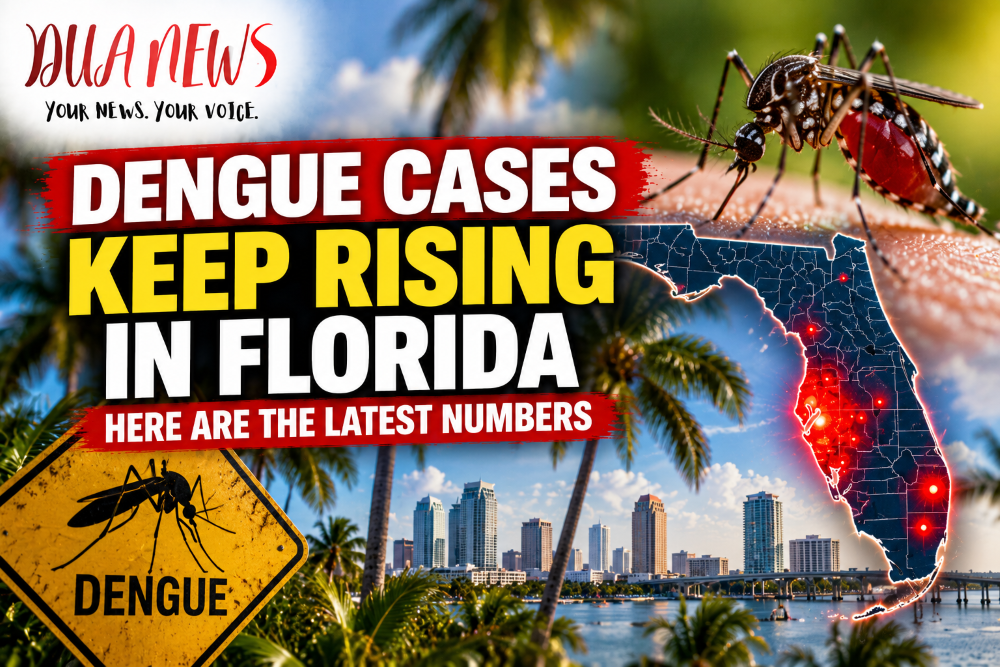
FLORIDA — October 23, 2026. Dengue cases continue to rise across Florida, with the latest state health report showing hundreds of infections and a growing public health concern, particularly in the Tampa Bay region.
According to the Florida Department of Health, 745 dengue cases have been reported statewide in 2026, including 425 infections acquired locally and 320 cases associated with international travel.
The latest figures cover the week of October 11–17 and were released on October 22.

57 New Local Cases Reported in One Week
Florida recorded 57 additional locally acquired dengue cases during the latest reporting period, bringing the statewide total from 368 to 425.
That represents an increase of approximately 15.5% in just one week.
Hillsborough County, which includes Tampa, remains the hardest-hit area, with 346 locally acquired cases reported this year.
Neighboring Pinellas County, home to St. Petersburg and Clearwater, has recorded 51 cases, making it the second most affected county in Florida.
Together, Hillsborough and Pinellas account for the overwhelming majority of locally acquired dengue infections in the state.
The virus has also spread to other parts of Florida.
Miami-Dade County has reported nine locally acquired cases, while Orange County, which includes Orlando, has recorded eight. Pasco County has reported four cases, and Citrus County has recorded two.
Brevard, Broward, Manatee, Palm Beach and Polk counties have each reported one locally acquired infection.
These numbers reflect infections transmitted within Florida and do not include cases associated with international travel.
Tampa Bay Remains at the Center of the Outbreak
The Tampa Bay region continues to experience the most significant dengue activity in Florida.
During the latest reporting week, Hillsborough County recorded 36 additional locally acquired cases, while Pinellas County reported 14.
The continuing increase has prompted local authorities to extend emergency measures and intensify mosquito-control operations.
On October 22, Hillsborough and Pinellas counties extended their local states of emergency through October 29.
The declarations allow officials to mobilize additional resources and continue mosquito surveillance, treatment and prevention efforts.
Authorities have also been working to eliminate mosquito breeding areas, particularly locations where standing water accumulates.
In Pinellas County, unfavorable weather conditions have delayed some planned aerial mosquito-control treatments.
Hundreds of Cases Linked to International Travel
In addition to the 425 locally acquired infections, Florida has reported 320 travel-associated dengue cases in 2026.
According to state surveillance data, 266 of those cases were associated with travel involving Cuba.
Health officials distinguish travel-associated cases from infections acquired through mosquito bites within Florida.
However, travel-related infections can contribute to local transmission when infected mosquitoes bite travelers carrying the virus and subsequently transmit it to other people.
Will Cooler Weather Slow the Spread?
Recent cooler weather across parts of Florida has raised hopes that mosquito activity could begin to decline.
However, health officials caution that cooler temperatures do not immediately eliminate the risk of dengue transmission.
Mosquitoes can remain active in suitable conditions, particularly in areas with standing water.
The latest increase in infections demonstrates that the outbreak remains an ongoing concern despite mosquito-control efforts.
What Are the Symptoms of Dengue?
Dengue is a viral infection transmitted primarily through the bites of infected Aedes mosquitoes.
Common symptoms include high fever, severe headache, pain behind the eyes, muscle and joint pain, nausea, vomiting and skin rash.
Most people recover, but some infections can develop into severe dengue, which may cause internal bleeding, shock and other life-threatening complications.
Health officials recommend seeking medical attention if symptoms develop, particularly after possible mosquito exposure.
People who may have dengue should avoid aspirin and ibuprofen until the illness has been ruled out because these medications can increase bleeding risks. Acetaminophen is generally recommended for managing fever and pain.
Health Officials Urge Residents to Take Precautions
Florida residents are being encouraged to take preventive measures, even in areas where relatively few dengue cases have been reported.
Health authorities recommend removing standing water from flowerpots, buckets, gutters and other containers around homes.
Residents should also use EPA-registered mosquito repellents, wear protective clothing when appropriate and maintain window and door screens.
Unlike some mosquitoes that are most active at night, the species responsible for dengue transmission frequently bite during daylight hours.
What Happens Next?
The Florida Department of Health continues monitoring infections and mosquito activity throughout the state.
The next weekly surveillance report will help determine whether the number of new infections is beginning to decline or whether the outbreak continues to expand.
For now, the latest figures show that dengue remains a serious public health concern.
With 745 reported cases statewide, including 425 locally acquired infections, Florida residents are being urged to remain alert and take precautions against mosquito bites.
Conversation 0