


Trump and DeSantis disagree on this issue
President Donald Trump and Florida Governor Ron DeSantis are taking noticeably different approaches to artificial intelligence, revealing a growing debate within the Republican Party over how much government oversight the rapidly developing technology needs.…
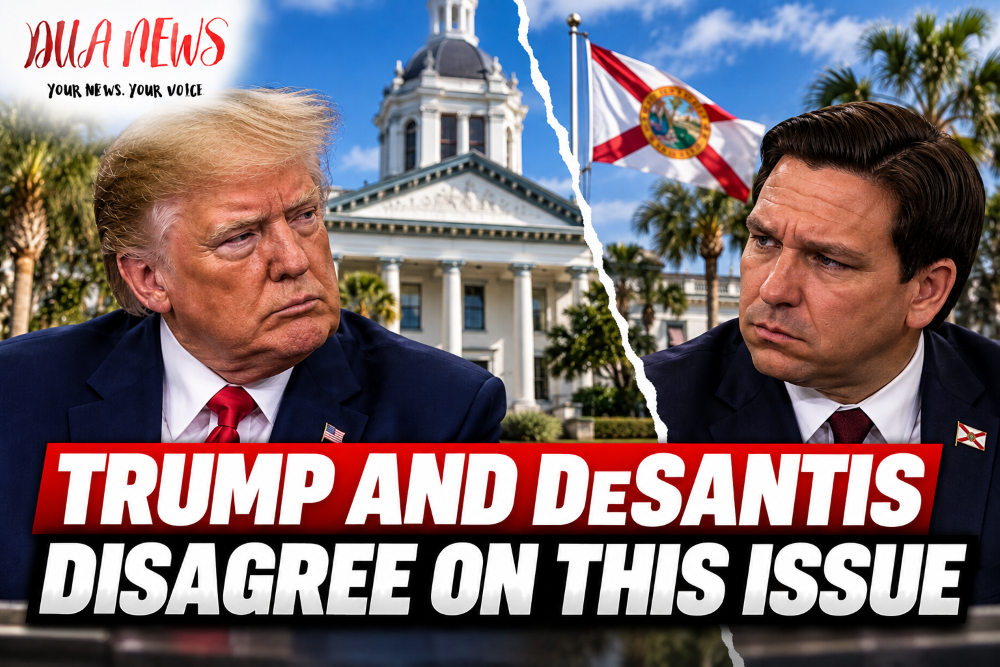
President Donald Trump and Florida Governor Ron DeSantis are taking noticeably different approaches to artificial intelligence, revealing a growing debate within the Republican Party over how much government oversight the rapidly developing technology needs.
While Trump has promoted AI innovation as essential to America’s economic growth and global competitiveness, DeSantis has argued that stronger protections are necessary to prevent potential harm to children, families and consumers.
The disagreement has become particularly visible in Florida, where state officials are pursuing tighter restrictions and legal action against major AI companies.

Trump Wants America to Lead the AI Race
The Trump administration has emphasized the importance of maintaining American leadership in artificial intelligence, particularly as competition with China intensifies.
Rather than imposing extensive new regulations, the administration has generally favored industry cooperation and voluntary safety commitments.
Earlier this month, Trump announced an agreement with leading technology companies to adopt additional AI safeguards.
However, the agreement relies largely on voluntary commitments rather than government-enforced penalties.
Supporters of this approach argue that excessive regulation could slow innovation, discourage investment and weaken America’s position in the global technology industry.
Critics question whether companies should be trusted to evaluate the safety of increasingly powerful AI systems without stronger independent oversight.
DeSantis Wants Stronger Protections
DeSantis has taken a more cautious position.
The Florida governor pushed for an AI Bill of Rights that would have introduced new consumer protections, including measures addressing children’s interactions with AI chatbots and greater transparency when people communicate with artificial intelligence instead of humans.
The proposal did not advance through the Florida Legislature.
The disagreement also highlighted tensions over whether AI should primarily be regulated by Washington or individual states.
DeSantis has argued that Florida should be able to act when federal protections are insufficient.
Florida Takes OpenAI to Court
The debate has extended beyond legislation.
Florida Attorney General James Uthmeier filed a civil lawsuit against OpenAI and CEO Sam Altman in June, accusing the company of misleading consumers about ChatGPT’s safety and failing to adequately address potential risks.
Those allegations remain disputed and have not been established as findings of fact.
On September 28, Uthmeier requested a temporary court injunction seeking additional restrictions on OpenAI.
Among the requested measures are independent safety reviews before the company develops new AI models, limitations on minors’ access to ChatGPT and changes to certain chatbot features and marketing practices.
The requests are part of ongoing litigation, not restrictions that have automatically taken effect.
OpenAI has said it is committed to developing AI safely and working with Florida and other states on practical policies that apply across the industry.
Americans Are Increasingly Concerned About AI
The political disagreement comes as public concern about artificial intelligence grows.
A Reuters/Ipsos poll published October 7 found that 57% of respondents believed the Trump administration was not taking AI risks seriously enough.
The survey also found substantial support for stronger government regulation, including among both Democratic and Republican respondents.
Concerns extend beyond chatbot safety to potential job losses, the energy demands of data centers and the possibility of increasingly autonomous AI systems causing harm.
What Does This Mean for Florida Residents?
For Floridians, the debate could eventually affect how children access AI applications, what safety information technology companies must provide and whether the state can impose restrictions beyond federal requirements.
But major questions remain unresolved.
Florida’s proposed AI Bill of Rights has not become law, and the state’s lawsuit against OpenAI is still being contested.
The disagreement between Trump and DeSantis illustrates a broader national question: Should the United States prioritize rapid AI development with industry-led safeguards, or require stronger government oversight before the technology advances further?
As AI becomes increasingly integrated into education, workplaces and everyday life, Florida is emerging as an important battleground in that debate.
Conversation 0