


Latest updates: Florida orders evacuations
Hurricane Isaias has become the first Atlantic hurricane of the 2026 season, prompting emergency preparations, evacuation orders and school closures along parts of Florida's Gulf Coast. The storm strengthened overnight Wednesday into Thursday as…
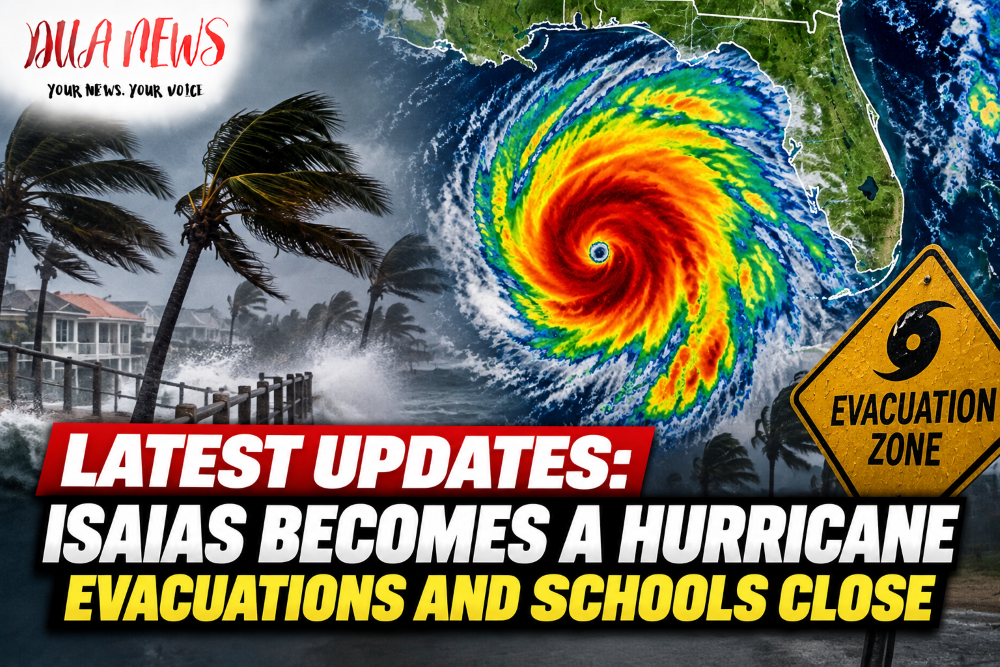
Hurricane Isaias has become the first Atlantic hurricane of the 2026 season, prompting emergency preparations, evacuation orders and school closures along parts of Florida’s Gulf Coast.
The storm strengthened overnight Wednesday into Thursday as it moved east-northeast across the Gulf of Mexico, with forecasters warning that additional intensification is possible before it reaches the northern Gulf Coast.
Isaias Reaches Hurricane Strength
According to the National Hurricane Center’s 1 a.m. CDT Thursday advisory, Isaias had maximum sustained winds of 75 mph, making it a Category 1 hurricane.

The storm was located approximately 445 miles south-southwest of the mouth of the Mississippi River and was moving east-northeast at 9 mph.
Forecasters expect the system to strengthen further as it approaches the Gulf Coast, with landfall possible late Friday or early Saturday.
The forecast track places portions of the Florida Panhandle, Alabama and Mississippi at risk. However, the precise location and intensity at landfall remain uncertain.
Evacuation Orders Issued
Authorities have ordered evacuations in vulnerable coastal areas as residents prepare for potentially dangerous storm surge, damaging winds and flooding.
The Associated Press reported that evacuation orders are in place in parts of Florida, while state officials have declared an emergency to support preparations.
Residents in evacuation zones should follow instructions from their county emergency management offices rather than relying solely on the hurricane’s projected path.
Storm surge can affect areas well away from the storm’s center, particularly along bays, rivers and low-lying coastlines.
Florida Schools Announce Closures
Several school districts in Northwest Florida have already announced schedule changes.
According to the Florida Department of Education, the following closures have been reported:
- Okaloosa County: Schools closed Thursday, October 8, and Friday, October 9.
- Walton County: Schools closed Thursday and Friday.
- Escambia County: Schools closed Friday, October 9.
- Santa Rosa County: Schools closed Friday.
- Gadsden County: Schools closed Friday.
- Jackson County: Schools closed Friday.
- Liberty County: Schools closed Friday.
- Washington County: Early dismissal at noon Thursday, followed by closure Friday.
Bay County Schools is also suspending operations Friday, although students and teachers were already scheduled to be off for fall break.
Additional announcements may follow as the storm approaches.
Hurricane and Storm Surge Warnings
The National Hurricane Center has issued hurricane warnings for portions of the northern Gulf Coast, including the area from Ocean Springs, Mississippi, to the Bay/Gulf County line in Florida.
A storm surge warning extends from the mouth of the Mississippi River to the Steinhatchee River in Florida.
Other coastal areas are under tropical storm warnings.
These alerts indicate that dangerous conditions are expected or possible within the warning areas.
Residents should monitor local emergency officials for specific information about flooding risks, evacuation zones and road closures.
Heavy Rain and Flooding Remain Major Concerns
Even communities that avoid the strongest winds could experience dangerous flooding.
Heavy rainfall may overwhelm drainage systems, flood roads and cause rivers or streams to rise.
Storm surge presents a separate danger, as strong winds push seawater inland.
Forecasters also warn that tornadoes are possible in parts of the region as the hurricane approaches.
Drivers should never attempt to cross flooded roads, and residents should avoid entering floodwaters.
Oil Production Disrupted in the Gulf
The hurricane is also affecting energy operations.
Reuters reported that major companies, including Shell and Chevron, have reduced offshore operations and evacuated some personnel as a precaution.
Approximately one-quarter of Gulf offshore oil production had been shut down ahead of the storm.
The interruptions highlight the hurricane’s potential economic impact beyond the communities directly threatened by landfall.
However, the extent of any longer-term disruption remains unknown.
What Happens Next?
Thursday and Friday will be critical days for residents along the northern Gulf Coast.
Isaias is forecast to strengthen as it approaches land, and emergency officials are preparing for the possibility of damaging winds, flooding and prolonged power outages.
The storm’s exact track may still change, making it important for residents outside the projected center to remain alert.
Anyone living in an evacuation zone should follow local orders immediately.
For the latest official information, visit the National Hurricane Center at nhc.noaa.gov and check announcements from local emergency management agencies.
Conversation 0