


Saudi Arabia should ask Pakistan and Turkiye for help — not America (Opinion)
Ervin Shkulaku/DUANEWS.NET The latest reports of Houthi attacks against Saudi Arabia raise an important question: Why should the United States once again be expected to intervene in a Middle Eastern conflict? Saudi Arabia is…
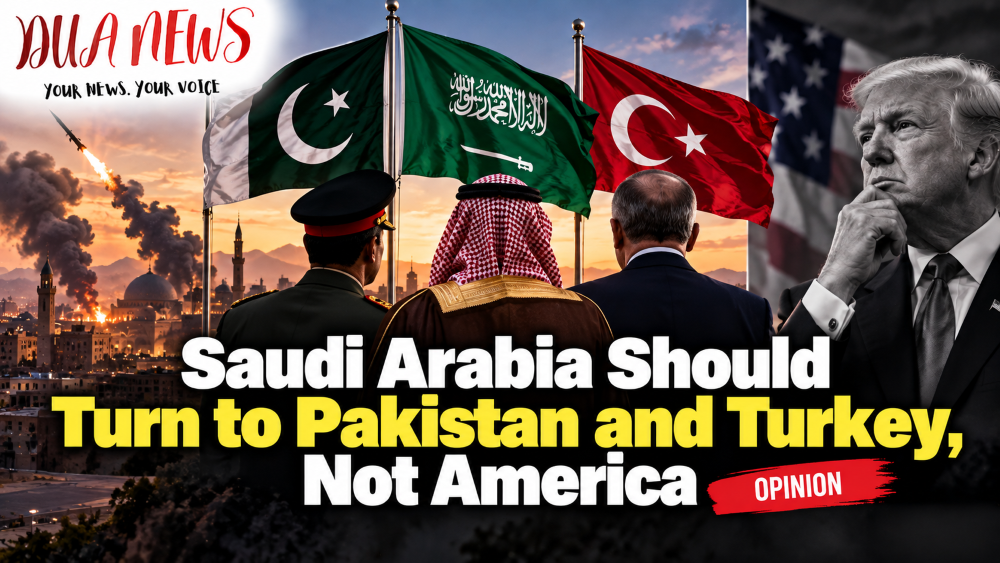
Ervin Shkulaku/DUANEWS.NET
The latest reports of Houthi attacks against Saudi Arabia raise an important question: Why should the United States once again be expected to intervene in a Middle Eastern conflict?
Saudi Arabia is not a poor or defenseless country. It is one of the wealthiest nations in the region, with enormous oil revenues, significant military spending and longstanding relationships with powerful allies.

Among those partners are Pakistan and Turkiye, two major Muslim-majority countries with substantial military capabilities.
Saudi Arabia already has defense cooperation arrangements with Pakistan, while Turkiye has also been involved in discussions about closer regional security cooperation. These relationships offer opportunities to strengthen regional defenses without automatically turning to Washington.
These are countries that share religious and historical ties, as well as important political and strategic interests. Their governments should be capable of sitting together, coordinating their security policies and finding solutions to threats affecting their region.
It is time for Middle Eastern countries to take greater responsibility for solving their own problems.
Pakistan possesses a powerful military and nuclear weapons. Turkiye has one of NATO’s largest armed forces and a growing defense industry. Saudi Arabia has the financial resources to invest in sophisticated defensive systems.
Together, they have the potential to develop stronger regional security cooperation.
Of course, sharing a religion does not mean these countries will always agree politically. But their existing relationships provide a foundation for practical cooperation.
The United States has spent decades investing military resources, money and political attention in the Middle East. American taxpayers have repeatedly carried the costs and risks associated with conflicts far from their own borders.
Why should that expectation continue indefinitely?
If Saudi Arabia wants American military assistance, there should be a clear financial arrangement.
Saudi Arabia should pay its fair share of the costs of any American military operation undertaken specifically for its defense.
The Saudi government has considerable financial resources. It should not expect American taxpayers to shoulder additional expenses without accountability, particularly when the kingdom can afford to contribute substantially to its own security.
This is not an argument against the Saudi people, nor does it suggest that every Saudi citizen is wealthy. It is an argument about the responsibilities of a financially powerful government.
If Washington decides that intervention also serves vital American national security interests, those interests must be considered separately. But defending a wealthy partner should not automatically mean sending American forces into danger while American taxpayers absorb the costs.
There is another important issue: military intervention does not always bring lasting peace.
A new American campaign against the Houthis could deepen the conflict in Yemen and create further instability across the region.
Saudi Arabia, Pakistan and Turkiye should first pursue coordinated air defense, intelligence sharing, diplomatic pressure and regional negotiations.
They should use their own resources and partnerships before asking another country to enter the conflict.
The United States can remain a diplomatic and strategic partner without becoming the automatic military solution to every crisis.
The Middle East belongs to the people who live there. Its governments must take primary responsibility for its security and future.
And if Saudi Arabia ultimately decides that it needs American military power, then the Saudi government should be prepared to help pay the bill.
The era of expecting Washington to solve every regional security problem should come to an end.
Conversation 0