

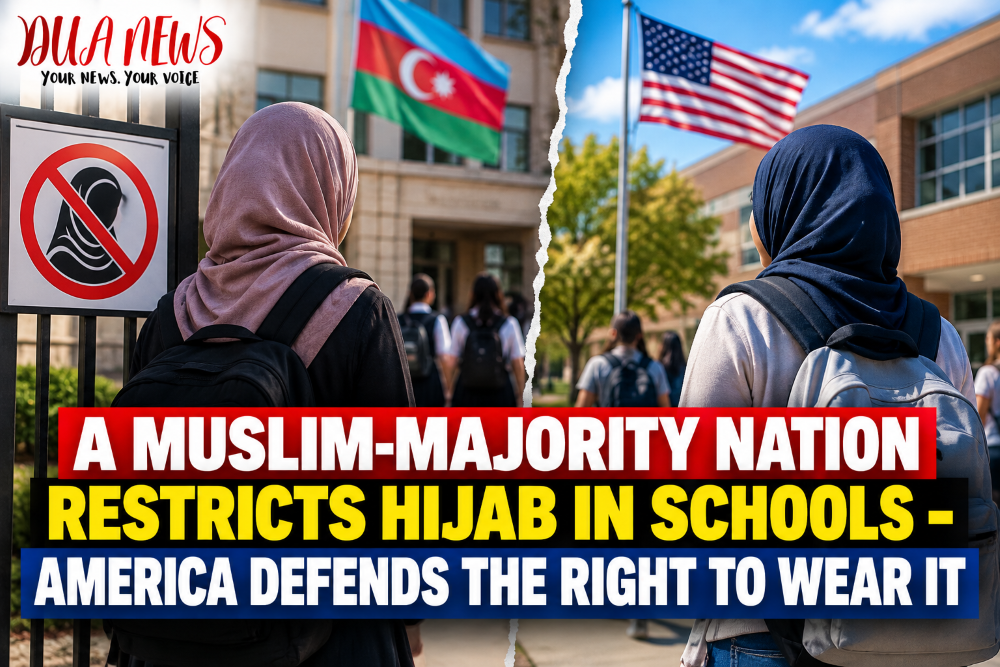
A muslim-majority nation restricts hijab in schools — America defends the right to wear it
Ervin Shkulaku-DUANEWS.NET— October 12, 2026 Azerbaijan, a country where the overwhelming majority of the population is Muslim, is facing controversy over school dress regulations that have reportedly prevented some girls wearing Islamic headscarves from…
Ervin Shkulaku-DUANEWS.NET— October 12, 2026
Azerbaijan, a country where the overwhelming majority of the population is Muslim, is facing controversy over school dress regulations that have reportedly prevented some girls wearing Islamic headscarves from attending classes.

The dispute has sparked protests, arrests and a growing debate over religious freedom, education and the separation of religion and state.
The controversy is particularly striking because Azerbaijan is a Muslim-majority nation, yet its government maintains a secular education system.
What Changed in Azerbaijan?
On September 21, Azerbaijani authorities approved school dress regulations requiring students to comply with official uniform standards and the secular character of public education.
Although the regulations do not explicitly mention the hijab, reports indicate that some schools have interpreted them as prohibiting Islamic headscarves.
As a result, several girls wearing hijabs were reportedly denied entry to classrooms, prompting objections from parents and students.
The situation escalated in October, when demonstrations took place over the enforcement of the rules.
According to reports published on October 12, authorities announced the arrest of 37 people in connection with unrest surrounding the school dress controversy.
A Muslim-Majority Country With Secular Laws
Azerbaijan is home to a predominantly Muslim population, but its constitution establishes the country as a secular state.
Government officials have long emphasized that public education should remain separate from religious institutions.
Critics of the restrictions, however, argue that preventing girls from attending school because they wear a headscarf raises serious questions about religious freedom and equal access to education.
The controversy highlights a broader debate: Should public schools enforce strictly secular dress codes, or should students be permitted to express their religious beliefs through clothing?
What About the United States?
The situation is significantly different in the United States, where Muslim students are generally allowed to wear hijabs in public schools.
The First Amendment to the U.S. Constitution protects religious freedom, and public schools generally cannot prohibit students from wearing religious head coverings simply because they express a religious belief.
Federal civil rights protections also help protect students against discrimination based on religion.
This means a Muslim girl attending a public school in Florida, New York, California or elsewhere in the United States is generally permitted to enter her classroom while wearing a hijab.
Schools may enforce neutral safety rules in limited circumstances, but a blanket prohibition targeting Islamic headscarves would raise serious constitutional concerns.
The contrast illustrates how two countries can approach religious expression in public education very differently.
Debate Over Religious Freedom Continues
Supporters of strict secular school policies argue that standardized uniforms help maintain neutrality in public education.
Opponents counter that forcing students to remove religious clothing can interfere with personal freedoms and, in some cases, prevent children from receiving an education.
For families affected by the restrictions in Azerbaijan, the issue is not simply about clothing. It is also about whether religious identity should determine a student’s ability to attend school.
As the controversy continues, the treatment of students wearing hijabs is drawing attention to the balance between secular government policies and individual religious rights.
Conversation 0