


Hurricane Isaias death toll rises
The death toll from Hurricane Isaias has risen to six in Florida, Governor Ron DeSantis confirmed, as communities across the state's Panhandle continue recovering from the powerful storm that struck the Gulf Coast last…
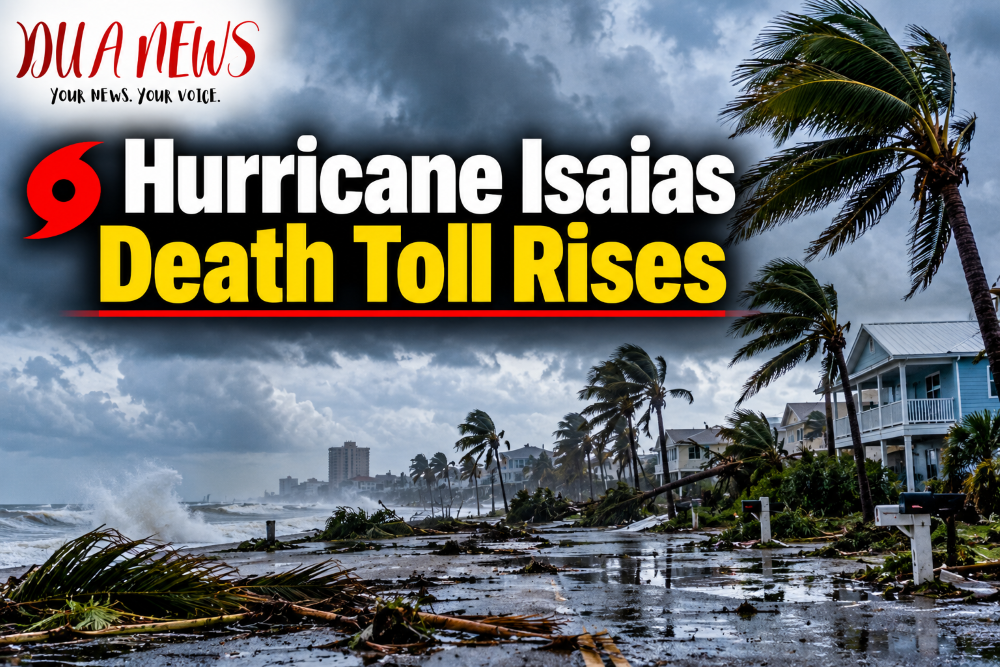
The death toll from Hurricane Isaias has risen to six in Florida, Governor Ron DeSantis confirmed, as communities across the state’s Panhandle continue recovering from the powerful storm that struck the Gulf Coast last week.
The latest figures represent an increase from two previously confirmed deaths, highlighting the dangers that can continue long after a hurricane has moved away.
During a Tuesday news conference in Vernon, Florida, DeSantis confirmed that four additional deaths had been linked to the hurricane and its aftermath.

How Did the Six Victims Die?
Two of the earliest confirmed fatalities occurred in Escambia County.
A woman was killed when a tree fell onto her home during the storm. Her husband, who was inside the house at the time, was injured but was expected to survive.
In a separate incident, a man died from carbon monoxide poisoning after operating a generator inside his garage.
The four additional fatalities involved incidents connected to the storm’s aftermath.
One person died in an accident while removing fallen trees. Another was killed in a traffic collision at an intersection where the traffic signal was not functioning.
Two other deaths were linked to interruptions in medical treatment caused by storm-related conditions.
Florida officials count both direct and indirect storm-related fatalities, including deaths that occur during cleanup and recovery.
Thousands of Florida Residents Still Without Electricity
Hurricane Isaias made landfall near Destin on Friday night, October 9, as a Category 2 hurricane, bringing destructive winds, heavy rainfall and widespread power outages.
Approximately 450,000 homes and businesses lost electricity during the storm.
By Tuesday afternoon, nearly 54,000 customers in the Florida Panhandle were still without power, with Escambia and Santa Rosa counties among the hardest-hit areas.
Utility crews have been working to restore service, although some damaged properties cannot safely be reconnected until repairs are completed.
More than 16,000 utility workers have participated in restoration efforts.
Recovery Efforts Continue Across the Panhandle
State and local emergency teams continue removing fallen trees, clearing roads and assisting communities affected by the hurricane.
Florida’s Division of Emergency Management has carried out more than 600 response missions.
Emergency supply distribution locations remain available in several affected counties, including Escambia, Santa Rosa, Walton and Washington.
The state has also deployed transportation resources to assist local governments with debris removal.
The Danger Does Not End When the Hurricane Passes
The rising death toll illustrates how the consequences of a hurricane can extend beyond the initial landfall.
Fallen trees, damaged electrical infrastructure, unsafe generator use, blocked roads and interruptions to essential medical services can all create life-threatening situations during recovery.
Authorities continue urging residents to exercise caution while cleaning up damaged properties and restoring normal activities.
Although Hurricane Isaias has moved away, its effects remain visible across Northwest Florida.
For six Florida families, the storm has left an irreversible loss, even as thousands of other residents work to rebuild their lives.
DUANEWS | October 14, 2026
Conversation 0