


Weather alert: Could tropical storm Josephine threaten Florida?
DUANEWS | October 21, 2026 FLORIDA — Meteorologists are closely monitoring a weather system over the Atlantic Ocean that could develop into the next named storm of the 2026 hurricane season. According to reports…
DUANEWS | October 21, 2026
FLORIDA — Meteorologists are closely monitoring a weather system over the Atlantic Ocean that could develop into the next named storm of the 2026 hurricane season.
According to reports published Wednesday morning, the National Hurricane Center is monitoring a low-pressure system off the U.S. East Coast that has been given a 40% chance of tropical or subtropical development.

If the system strengthens sufficiently to become a named storm, it could receive the name Josephine.
But could Florida be affected?
A New Storm Could Develop in the Atlantic
The weather system is located several hundred miles off the Mid-Atlantic coast, where it is producing showers, thunderstorms and strong winds.
Forecasters are watching whether the system develops subtropical characteristics as it moves over Atlantic waters.
The reported probability of development is 40%, meaning that formation remains uncertain. The system has not yet been classified as a named tropical or subtropical storm.
Could Josephine Reach Florida?
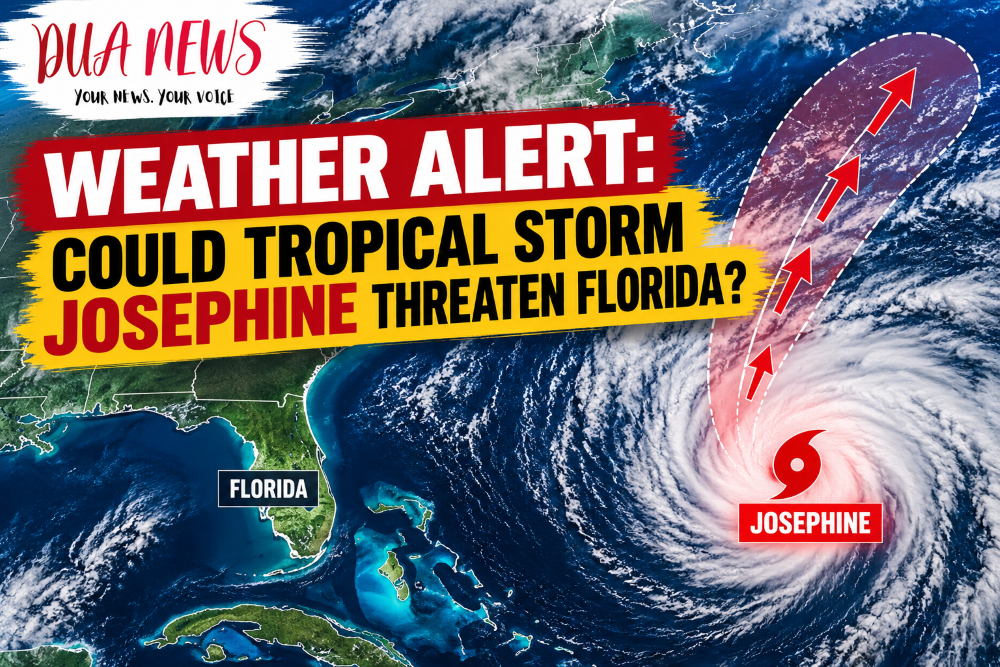
Current forecasts suggest that the system will move toward the north-northeast, eventually heading farther away from the U.S. coastline.
At this time, a direct impact on Florida is not expected.
However, coastal conditions can become dangerous even when a storm remains far offshore. Strong winds, rough surf and rip currents may affect beaches along the Atlantic coast, depending on local weather conditions.
Residents should continue monitoring official forecasts rather than assuming that the formation of a named storm automatically means a hurricane or tropical storm will strike Florida.
What Does This Mean for Jacksonville, Orlando and Miami?
In Northeast Florida, beachgoers should pay particular attention to surf conditions and rip-current warnings. Jacksonville-area beaches are already experiencing rough ocean conditions, making swimming potentially hazardous.
Farther south, including the Miami area, residents should continue following marine forecasts for any changes in coastal conditions.
Orlando and other inland communities are not currently facing a direct threat from this developing Atlantic system.
No official forecast currently indicates that the system will make landfall in Florida.
Dangerous Ocean Conditions Remain a Concern
Even without a direct landfall, Atlantic weather systems can generate large waves and dangerous currents along sections of the coastline.
Rip currents are particularly hazardous because they can pull swimmers away from shore, sometimes without obvious warning.
The National Weather Service advises beachgoers to follow posted warning flags, pay attention to lifeguards and avoid entering the water when hazardous surf conditions are present.
What Happens Next?
Meteorologists will continue monitoring the system over the coming days to determine whether it becomes better organized and develops into a named storm.
Its projected movement away from the East Coast currently reduces the likelihood of a direct threat to Florida.
However, tropical weather forecasts can change, and residents are encouraged to follow updates from the National Hurricane Center and local weather authorities.
For now, the most important message for Floridians is to remain informed without assuming that Josephine is already a confirmed storm or that it is heading toward the state.
Conversation 0