


Bacteria claims another life in Florida — How can we protect ourselves?
Ervin Shkulaku/DUANEWS Florida health officials have confirmed another death linked to Vibrio vulnificus, a potentially deadly bacterium found naturally in warm coastal waters. The latest death was reported in Pinellas County, making it the…
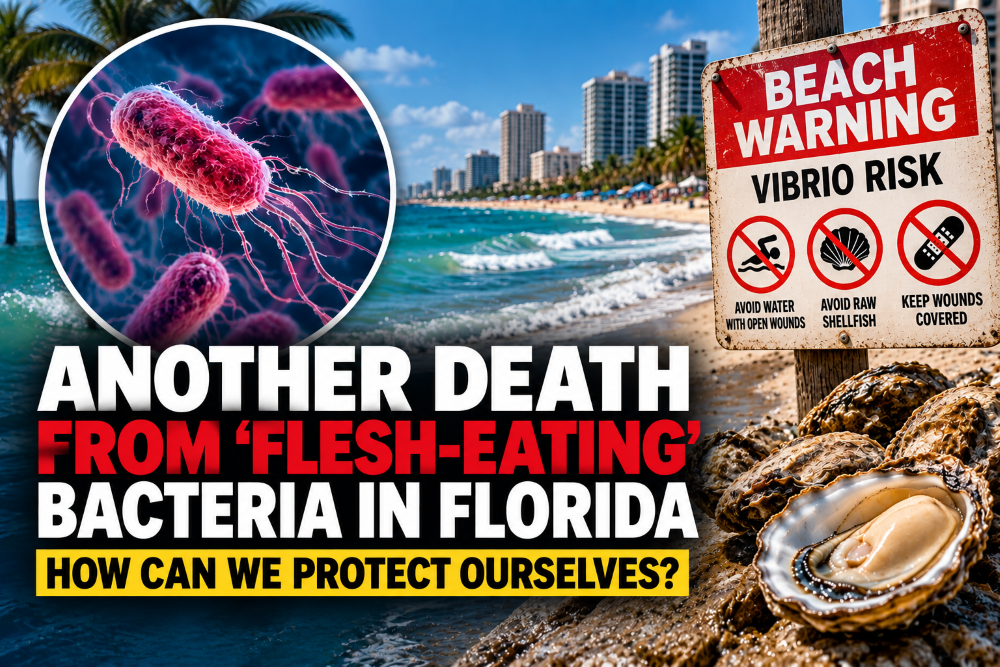
Ervin Shkulaku/DUANEWS
Florida health officials have confirmed another death linked to Vibrio vulnificus, a potentially deadly bacterium found naturally in warm coastal waters.
The latest death was reported in Pinellas County, making it the first fatal case recorded in the Tampa Bay county this year and the fifth Vibrio vulnificus death in Florida in 2026.

According to the Florida Department of Health, the state has recorded 23 confirmed infections and five deaths so far this year.
The five deaths have been reported in Bay, Broward, Marion, Palm Beach and Pinellas counties.
The Pinellas County case is particularly notable because only one confirmed infection has been reported in the county this year — and that case was fatal.
Health officials have not released the person’s identity or details about how the infection occurred.
What is Vibrio vulnificus?
Vibrio vulnificus is a bacterium that occurs naturally in warm saltwater and brackish water, where fresh water mixes with seawater.
It is sometimes referred to as a “flesh-eating bacteria” because severe infections can cause rapid destruction of skin and tissue around an infected wound.
People can become infected when an open cut or wound comes into contact with coastal water. Infection can also occur after eating raw or undercooked shellfish, particularly oysters.
The bacteria do not mean that Florida’s beaches themselves are suddenly contaminated. Vibrio vulnificus occurs naturally in coastal environments, particularly when water temperatures are warm.
How dangerous is it?
For many healthy people, exposure does not result in severe illness. But the infection can become extremely serious for people with weakened immune systems and certain underlying health conditions, particularly chronic liver disease.
The Florida Department of Health says about one in five people who develop a Vibrio vulnificus infection die, sometimes within just a day or two of becoming ill.
When the bacteria enter the bloodstream, the situation can become even more dangerous. Florida health officials say bloodstream infections are fatal in approximately 50% of cases.
Severe wound infections can cause tissue destruction, and some patients require intensive care or even amputation.
What symptoms should people watch for?
Symptoms can include fever, chills, nausea, vomiting, diarrhea and stomach cramps.
When the bacteria infect a wound, warning signs can include increasing redness, severe pain, swelling, warmth, discoloration or fluid leaking from the wound.
Health officials recommend seeking medical attention quickly when these symptoms appear after exposure to coastal water or raw seafood.
Florida has recorded cases across the state
The problem is not limited to Tampa Bay.
Florida’s 23 confirmed cases this year have been reported across several parts of the state, including Duval, Miami-Dade, Broward, Palm Beach, Hillsborough, Lee and St. Johns counties, among others.
Duval County has recorded one confirmed case in 2026, but no death, according to the latest state data.
Florida recorded 33 cases and five deaths in all of 2025. In 2024, however, the numbers were considerably higher, with 82 cases and 19 deaths. State health officials noted an unusual increase in several Gulf Coast counties that year following Hurricane Helene.
How to reduce the risk
Florida health officials recommend avoiding raw oysters and other raw shellfish.
People with cuts, scrapes or other open wounds should also avoid exposing them to saltwater, brackish water or floodwater. If contact occurs, the wound should be thoroughly washed with soap and clean running water.
The warning is particularly important during Florida’s warmer months, when conditions in coastal waters are favorable for the bacteria.
The latest death serves as another reminder that although Vibrio vulnificus infections remain relatively rare, they can become life-threatening very quickly.
Conversation 0