


More Florida families are turning to food banks
More Florida families are turning to food banks and food pantries as the rising cost of everyday necessities continues to put pressure on household budgets. The trend is showing up across the state —…
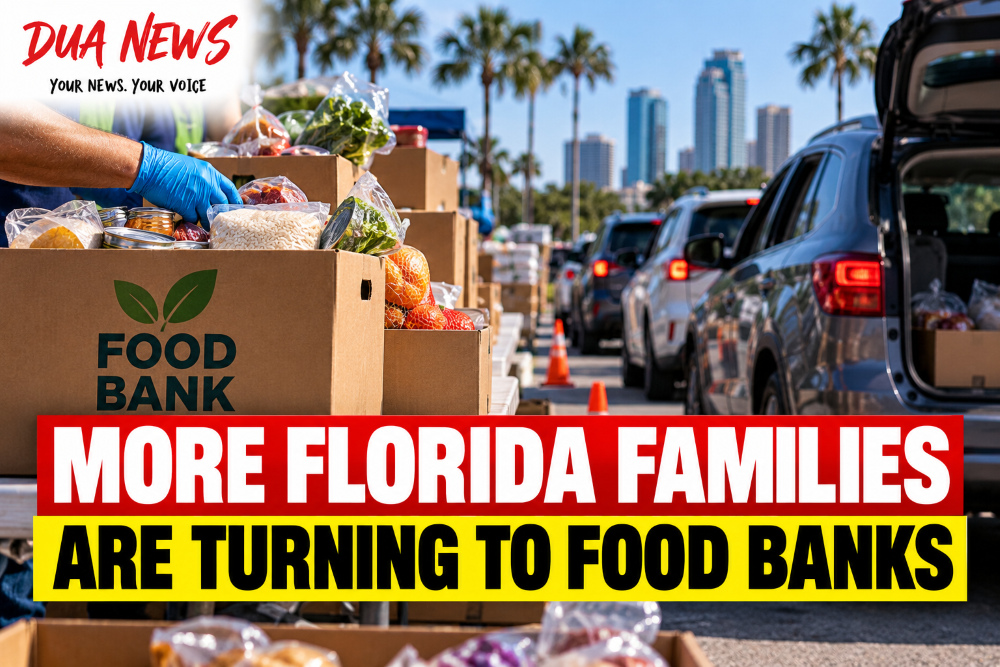
More Florida families are turning to food banks and food pantries as the rising cost of everyday necessities continues to put pressure on household budgets.
The trend is showing up across the state — from Jacksonville and Orlando to Tampa Bay and South Florida — as food assistance organizations report growing demand from families struggling to keep groceries on the table.
And increasingly, the people asking for help are not necessarily unemployed.

Some are working families whose paychecks are simply no longer stretching far enough to cover housing, utilities, transportation, insurance and food.
In Northeast Florida, Feeding Northeast Florida reported a 20% increase in visitors to its food distribution events this spring compared with the first quarter of 2025.
The organization, which serves communities across 12 counties, distributed more than 38 million pounds of food last year and has been on pace to surpass that amount in 2026.
The pressure is also being felt in Central Florida.
Second Harvest Food Bank of Central Florida says demand is increasing while the organization is simultaneously dealing with higher transportation costs.
Its fleet of refrigerated trucks moves food throughout Central Florida, and rising fuel expenses have added thousands of dollars to monthly operating costs.
In the Tampa Bay area, food banks are also reporting a surge in families seeking assistance.
Some organizations say food inventories and donations have struggled to keep pace with the growing demand as the holiday season approaches.
South Florida is seeing a similar pattern.
Feeding South Florida, which serves Miami-Dade, Broward, Palm Beach and Monroe counties, says economic pressures are pushing more residents toward food assistance.
The organization has reported a nearly 29% increase in recipient registrations since 2024.
Some of the Floridians seeking assistance have full-time jobs but say higher prices for groceries, gasoline and other necessities have made it increasingly difficult to make ends meet.
Changes in government food assistance are adding another layer of pressure.
Florida has experienced a significant decline in participation in the Supplemental Nutrition Assistance Program, commonly known as SNAP. As fewer people receive government food benefits, local organizations say more families are turning to food banks and community grocery programs.
The situation in Florida reflects a broader national problem.
A new 2026 report from Feeding America found that six in 10 people surveyed who have experienced food insecurity or received charitable food assistance do not feel financially stable.
Nearly half said they had delayed paying bills such as rent or medical expenses so they could afford groceries.
For Florida’s food banks, the concern now is what happens if demand continues increasing.
Organizations across the state are preparing to serve families who may never have expected to need help buying food.
For many Florida households, the calculation has become increasingly difficult: pay the rent, fill the gas tank, cover the bills — and still find enough money to put food on the table.
Conversation 0