


Did scientists finally discover Noah’s Ark? Here is the truth
Ervin Shkulaku- October 12, 2026 A viral video claiming that archaeologists have finally discovered Noah's Ark near Mount Ararat in Turkey has sparked renewed interest in one of the world's most famous biblical mysteries.…
Ervin Shkulaku- October 12, 2026
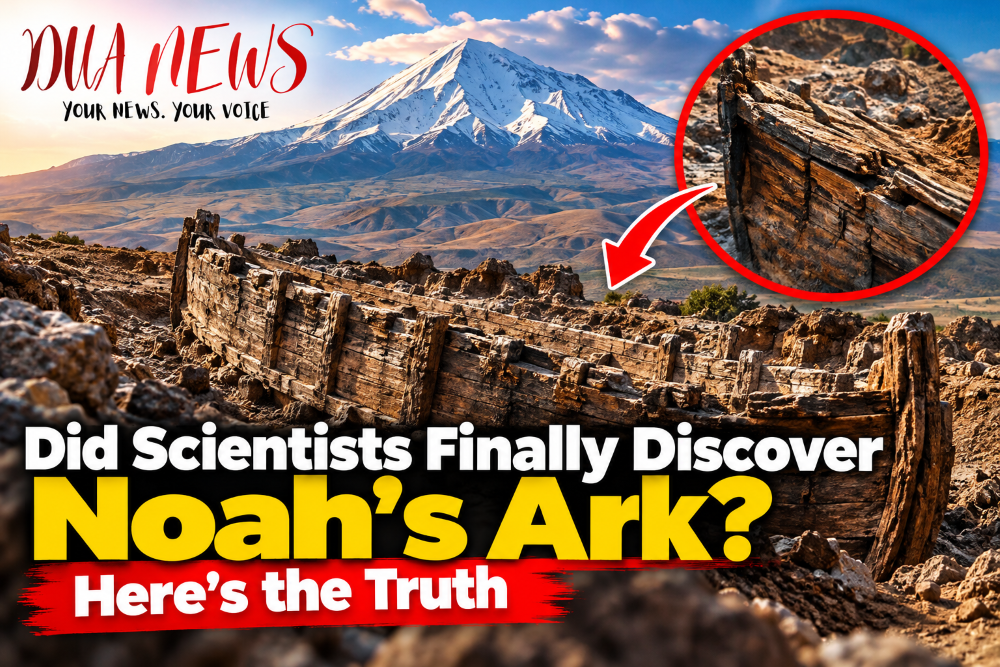
A viral video claiming that archaeologists have finally discovered Noah’s Ark near Mount Ararat in Turkey has sparked renewed interest in one of the world’s most famous biblical mysteries.
The footage appears to show an archaeological excavation uncovering what looks like the remains of an enormous ancient wooden vessel.

For some viewers, the images seem to offer extraordinary evidence that the legendary ark described in the Bible has finally been found.
But there is one major problem: the viral excavation footage is not authentic.
A Discovery That Never Happened?
According to a fact-check published by Lead Stories, the footage circulating online was generated using artificial intelligence rather than recorded during a genuine archaeological excavation.
The video presents a convincing scene, complete with what appear to be researchers, excavation equipment and the remains of an ancient structure.
However, realistic-looking footage is not the same as scientific evidence.
There has been no independently verified archaeological announcement establishing that Noah’s Ark has been discovered.
Why Mount Ararat?
Mount Ararat, located in eastern Turkey, has long been associated with the biblical story of Noah.
The Book of Genesis describes the ark coming to rest on the “mountains of Ararat” after the great flood.
Over the years, explorers and researchers have investigated unusual geological formations in the region, hoping to find evidence connected to the ancient account.
One frequently discussed site is the Durupınar formation, a boat-shaped geological feature that some enthusiasts believe could be related to the ark.
However, its appearance alone does not establish that it is a human-made vessel.
What Does Science Actually Say?
Scientists and archaeologists require physical evidence before confirming a discovery of this magnitude.
That would include identifiable archaeological materials, reliable dating methods, documented excavation procedures and independent examination by qualified researchers.
A viral video, even one that looks highly realistic, cannot meet those standards.
The existence of ancient flood traditions across different cultures is also not, by itself, proof that a particular vessel has been discovered.
The Bigger Problem With AI-Generated Discoveries
The controversy illustrates how artificial intelligence can make fictional archaeological discoveries appear real.
Videos showing ancient cities, mysterious artifacts and supposed historical breakthroughs can now be created without an actual excavation taking place.
When such material spreads without clear labeling, viewers may mistake digital creations for genuine scientific findings.
So, Has Noah’s Ark Been Found?
No scientifically verified discovery has established that Noah’s Ark has been found.
The viral footage does not provide evidence of such a discovery, and the claims surrounding it should not be confused with confirmed archaeological research.
The story of Noah’s Ark continues to attract religious, historical and scientific interest around the world.
But until credible physical evidence is independently examined and verified, claims that the legendary vessel has finally been discovered remain unproven.
For now, the latest viral discovery is a reminder that extraordinary claims require more than extraordinary-looking videos.
What About the Ongoing Research?
While the viral footage is fake, actual scientific investigations are continuing at Turkey’s Durupınar formation. Researchers have collected soil samples and conducted underground scans, but their findings have not established that the site contains Noah’s Ark. Additional laboratory results are expected in 2027.
Conversation 0