

This week, the UN meets in a world burning with war (Opinion)
In the days ahead, the United Nations headquarters will once again become the center of the world’s attention. Beginning September 22, leaders and senior representatives from around the world will gather for the General…
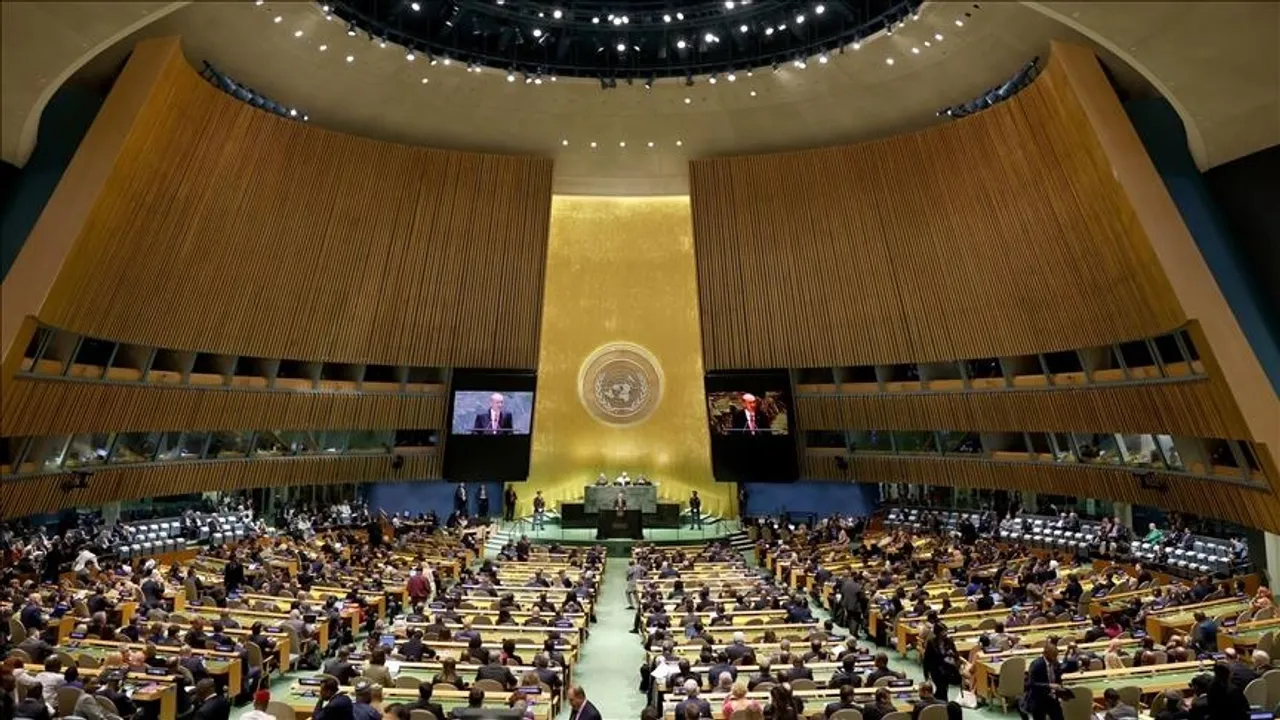
In the days ahead, the United Nations headquarters will once again become the center of the world’s attention. Beginning September 22, leaders and senior representatives from around the world will gather for the General Debate of the 81st session of the UN General Assembly, addressing wars, security, the global economy, climate change, and the future of the international order.
But this year, the speeches in New York are taking place at a particularly tense moment.
Just today, Ukraine launched a major drone attack toward Moscow, in one of the largest reported waves of attacks of its kind. Russian authorities reported that hundreds of drones had been intercepted, with damage and casualties reported in the Moscow region.

At the same time, the Middle East is facing another dangerous escalation. Yemen’s Houthi movement has launched missile and drone attacks toward targets in Saudi Arabia, while Saudi authorities said they intercepted a ballistic missile headed toward Riyadh.
And precisely at this moment, the world’s leaders are gathering at the United Nations.
One Week, Many Crises
The UN agenda for the coming days includes high-level meetings on climate action, rising sea levels, pandemic preparedness, discrimination, and nuclear disarmament.
But it will be difficult for diplomats in New York to ignore the conflicts unfolding outside the UN building.
The war between Russia and Ukraine continues, with long-range drone and missile attacks increasingly reaching deeper into each side’s territory.
In the Middle East, meanwhile, the conflict is taking on new dimensions, with attacks involving the Houthis and Saudi Arabia raising broader concerns about regional stability and the security of energy and transportation routes.
This places the United Nations before an old but increasingly urgent question:
How much influence can international diplomacy have when missiles and drones move faster than diplomats?
The World Needs More Than a Podium
The United Nations remains one of the few places where almost every country in the world can sit at the same table.
But ordinary people do not live inside diplomatic conference rooms.
They live in cities where air-raid sirens can sound. They live in countries where the price of fuel can be affected by attacks on energy infrastructure. They live with the uncertainty of watching the news and wondering whether the next conflict will move even closer to home.
That is why this week in New York, it will not be enough simply to listen to what world leaders say.
The world will be watching what they are prepared to do.
If a leader speaks about peace, people will want to know what concrete steps are being proposed.
If a country speaks about security, the question will be how that security can be achieved without creating an even larger conflict.
And if the United Nations speaks about international cooperation, the challenge will be demonstrating that cooperation can produce results even when the interests of major powers collide.
New York Will Hear Many Words
This could become one of the most important diplomatic weeks of the year.
On one side, world leaders will speak about a safer and more united world.
Outside the UN chamber, however, the reality is much harsher: drones over Moscow, missiles aimed toward Riyadh, and conflicts continuing to open new fronts.
Perhaps that is the real test for diplomacy.
Not how powerful the speeches sound inside the United Nations, but whether the world becomes even slightly safer after those speeches are over.
This week, the eyes of the world will be on New York.
But the most important question will remain the same:
What happens after the leaders leave the podium?/duanews.net
Conversation 0