


Hurricane Isaias hits Florida— What residents need to know tonight
Ervin Shkulaku/DUANEWS.NET Hurricane Isaias is moving onto Florida's Gulf Coast, bringing destructive winds, dangerous storm surge, widespread power outages and life-threatening flooding to communities across the western Florida Panhandle. According to FOX Weather's live…
Ervin Shkulaku/DUANEWS.NET
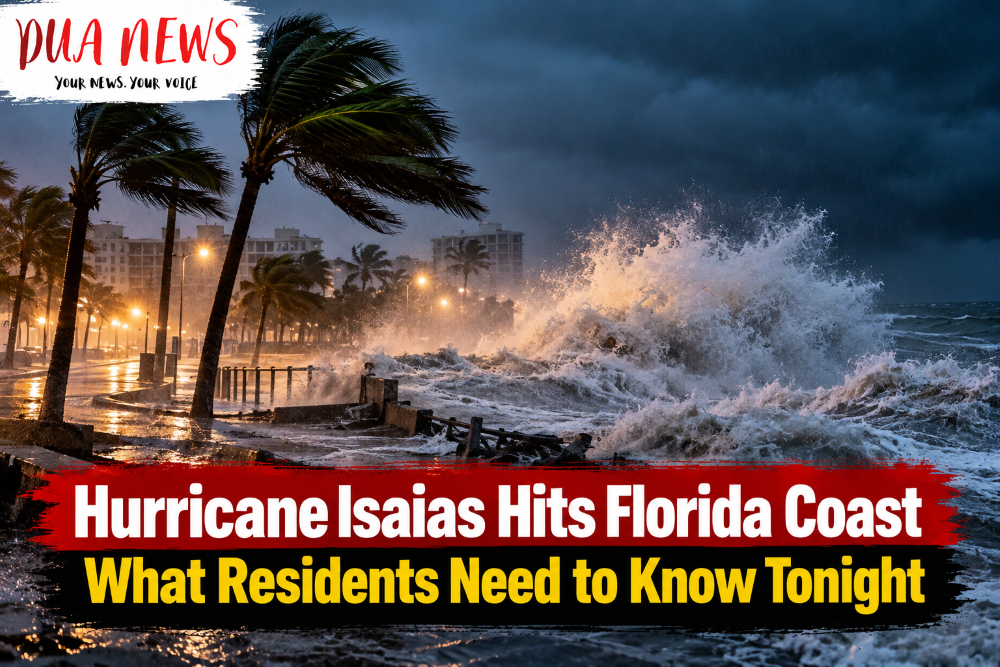
Hurricane Isaias is moving onto Florida’s Gulf Coast, bringing destructive winds, dangerous storm surge, widespread power outages and life-threatening flooding to communities across the western Florida Panhandle.
According to FOX Weather’s live coverage, the hurricane’s center was crossing the coastline Friday evening, with winds reaching 110 mph as the storm moved ashore.

By 9 p.m. Eastern Time, = Isaias had weakened slightly, with maximum sustained winds of 105 mph. Despite the decrease in strength, the hurricane remained capable of causing serious damage.
The National Hurricane Center had not yet confirmed the precise location and time of the storm’s official landfall in the latest update reviewed for this report.
Flooding becomes a major emergency
Some of the most dangerous conditions are unfolding around Destin and Okaloosa County, where a Flash Flood Emergency has been issued.
FOX Weather reported that water levels at Panama City Beach had climbed to 5.4 feet above normal tide by 9 p.m. Eastern Time, illustrating the growing threat of coastal flooding.
Powerful winds are also affecting Pensacola. A gust of 102 mph was reported at Pensacola City Hall, while sustained winds reached 62 mph.
Residents are being warned that flooding can develop rapidly, even in neighborhoods that have not previously experienced major hurricane damage.
More than 418,000 customers without electricity
The hurricane is also causing widespread power failures.
As of 8:45 p.m. Eastern Time, FOX Weather reported more than 303,000 customers without electricity in Florida and another 115,000 in Alabama.
The outages are being caused by powerful winds, fallen trees and damage to electrical infrastructure.
Utility crews may be unable to begin repairs until wind speeds decrease enough for workers to operate safely.
What should residents do tonight?
For people in the storm’s immediate path, the most important precaution is to remain in a safe shelter.
Residents should stay away from windows and exterior doors. During extreme winds, the safest location is generally a small, interior, windowless room on the lowest floor of a sturdy building, provided that location is not threatened by flooding.
Anyone facing rising floodwater should move to a higher level of the building when it is safe to do so. People should never enter an enclosed attic without a way to escape onto the roof if floodwater continues rising.
Drivers should avoid flooded streets entirely. Even shallow-looking water can hide damaged roads or become powerful enough to carry away vehicles.
Residents should also stay away from fallen power lines and avoid walking through standing water near electrical equipment.
If electricity fails, flashlights and battery-powered devices are safer than candles. Portable generators must be operated outdoors, well away from windows, doors and ventilation openings, to prevent carbon monoxide poisoning.
Families should keep medications, drinking water, emergency supplies and charged phones nearby.
People who remain in areas under evacuation orders should follow guidance from local emergency officials. Those already experiencing extreme winds or flooding should not attempt to evacuate through hazardous conditions without direction from emergency responders.
The danger does not end when the wind slows
One of the most dangerous mistakes during a hurricane is assuming the storm has passed when conditions temporarily become calm.
If the hurricane’s eye moves overhead, winds can decrease dramatically before returning from the opposite direction.
Flooding may also continue after the strongest winds have moved inland.
Residents should wait for official instructions before leaving shelter or attempting to inspect storm damage.
Where can residents find emergency information?
The National Hurricane Center provides official hurricane advisories at nhc.noaa.gov, while local National Weather Service offices issue warnings for specific communities.
Residents should also follow their county emergency management office for evacuation instructions, shelter information and road closures.
For immediate, life-threatening emergencies, call 911.
As Hurricane Isaias moves inland, authorities are urging residents to remain alert throughout the night.
Conversation 0